|
|
|
 |
 On behalf of the Board of Directors, I am pleased to present
the Annual Report of Melewar Industrial Group Berhad and its
group of companies ("the Group") for the financial year ended
30 June 2025 ("FY2025").
On behalf of the Board of Directors, I am pleased to present
the Annual Report of Melewar Industrial Group Berhad and its
group of companies ("the Group") for the financial year ended
30 June 2025 ("FY2025").
OUR BUSINESS AND OPERATIONS
The Group's core operations remain anchored in the steel
industry, primarily through its 74.13% stake in the listed
subsidiary, Mycron Steel Berhad ("Mycron"), which is engaged
in the manufacturing of Cold Rolled Coil ("CRC") steel sheets
and Steel Tubes and Pipes ("Steel Tube").
In addition to steel, the Group also manages other businesses
through its two wholly-owned subsidiaries:
- Ausgard Quick Assembly Systems Sdn Bhd ("AQAS"),
which develops commercial and residential structures for
niche property markets using the Industrialised Building
System ("IBS"); and
- Bumi Sdn Bhd ("3Bumi"), which is involved in the trading
and distribution of food products.
FINANCIAL PERFORMANCE
FY2025 proved to be a particularly challenging year, as
the Group contended with a volatile operating landscape
characterised by persistently weak global steel prices, rising
competition from imports, and trade headwinds triggered by
geopolitical tensions. The year was further weighed down by
the imposition of US tariffs and the removal of Malaysian and
Vietnamese steel mills from Mexico's approved exporter list,
which collectively disrupted external trade flows.
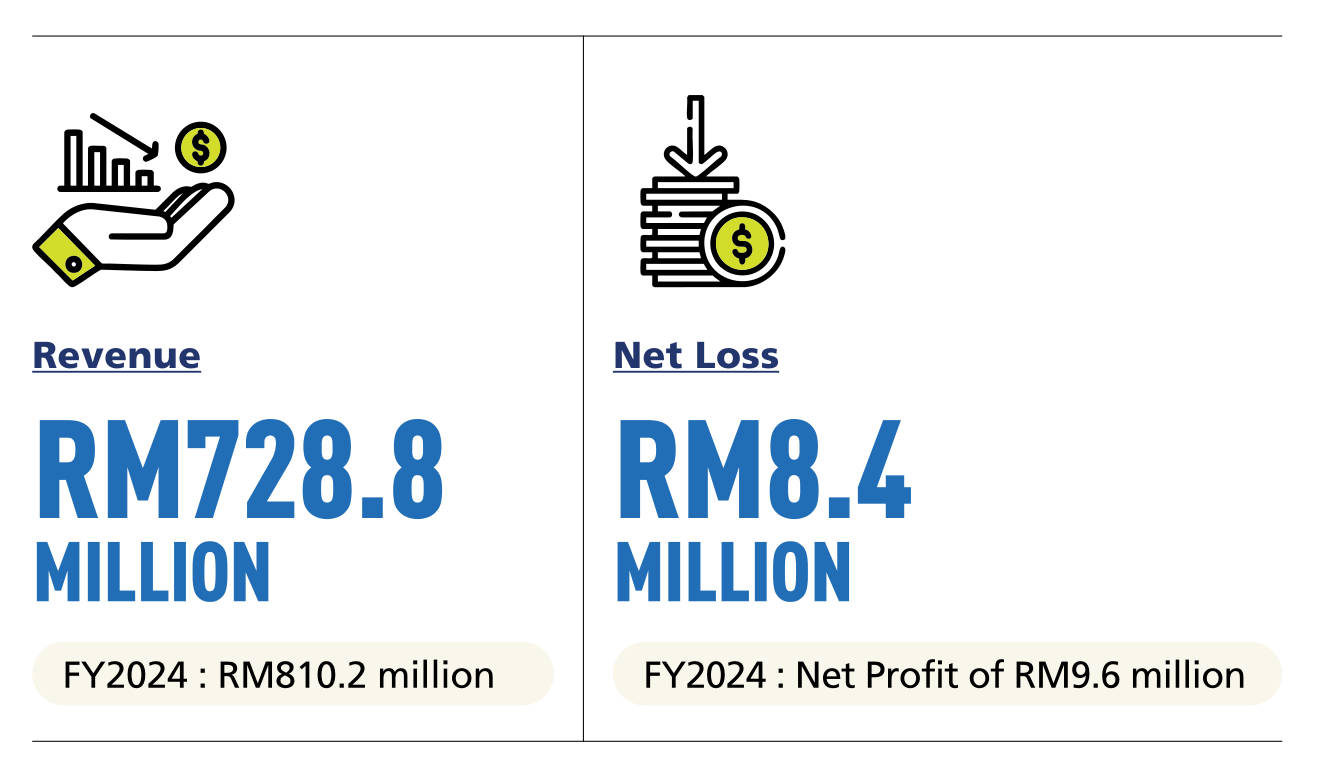
Against this backdrop, the Group's revenue declined by
10% to RM728.8 million, from RM810.2 million in FY2024.
The reduction was mainly attributable to weaker overseas
demand, which drove a 31% contraction in CRC segment
export sales and a 28% decline in the Steel Tube segment. In
addition, average unit selling prices for both CRC and Steel
Tube products fell by 11%, reflecting the sustained downtrend
in global steel prices.
FINANCIAL PERFORMANCE (CONT'D)
As a result, the Group
posted a net loss of
RM8.4 million for
FY2025, compared with
a net profit of RM9.6
million in the preceding
year. This translated into
a loss per share of 2.24
sen, versus earnings
per share of 1.43 sen in
FY2024.
Despite the weaker earnings, the
Group continues to maintain a sound
financial position. As of 30 June 2025,
Group shareholders' equity stood at
RM419.0 million, representing a net
asset value per share of RM1.17. Net
debt was reduced significantly to
RM23.3 million, from RM64.2 million
a year earlier, resulting in a lower
net gearing ratio of 4% (FY2024:
12%), which remains well within the
Group's debt capacity.
|
|
|
|
|
|
|
|
STEEL DIVISION
|
Mycron's steel operations are carried out through three subsidiaries:
- Mycron Steel CRC Sdn Bhd ("MCRC"), which operates in the
midstream segment by converting Hot Rolled Coil ("HRC") into
thinner gauge CRC steel sheets;
- Melewar Steel Tube Sdn Bhd ("MST"), which is in the downstream
segment, manufacturing Steel Tubes from HRC or CRC; and
- Silver Victory Sdn Bhd ("SV"), a smaller unit engaged in trading
steel-related products.
|
STEEL DIVISION (CONT'D)
|
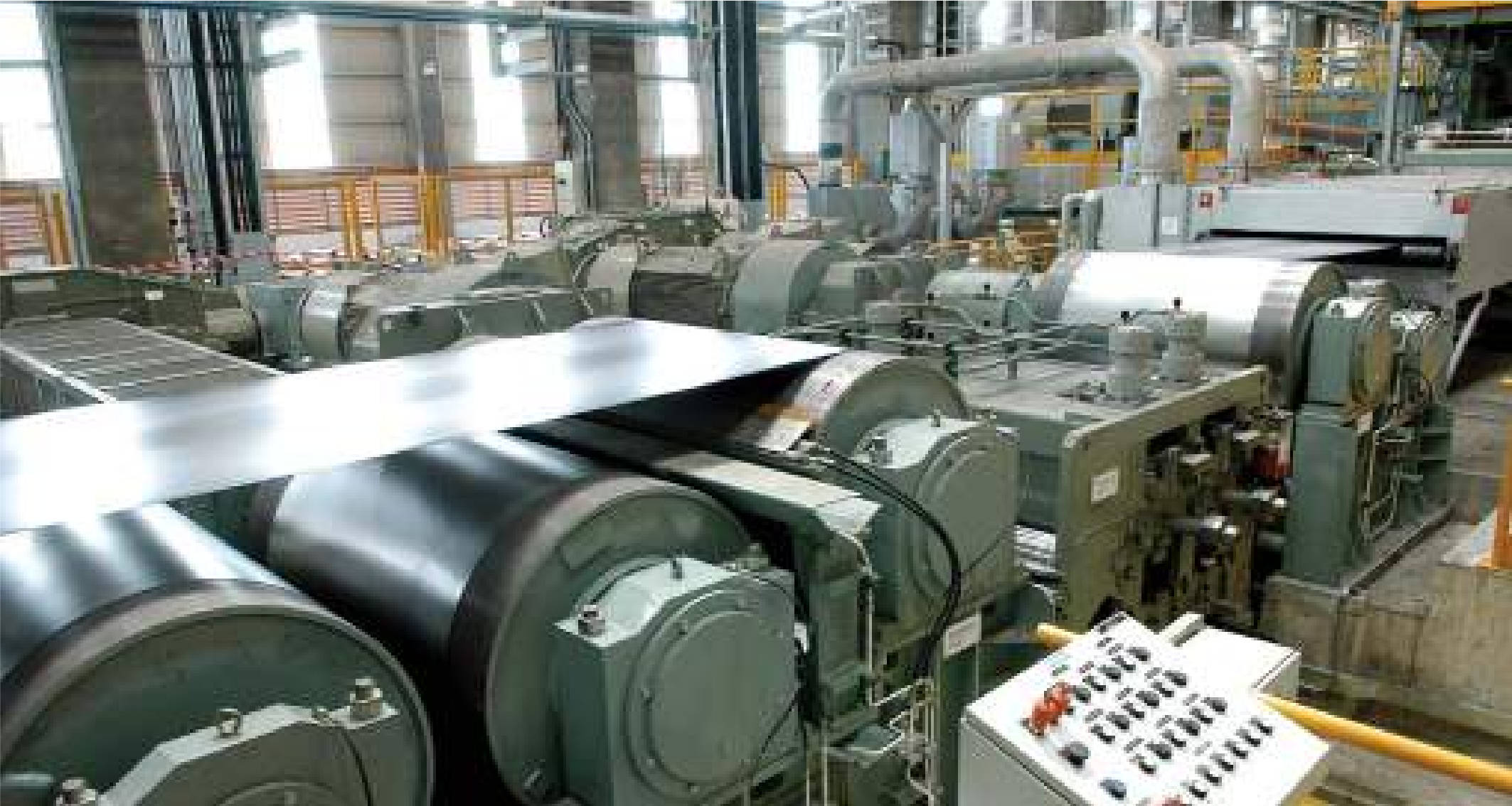
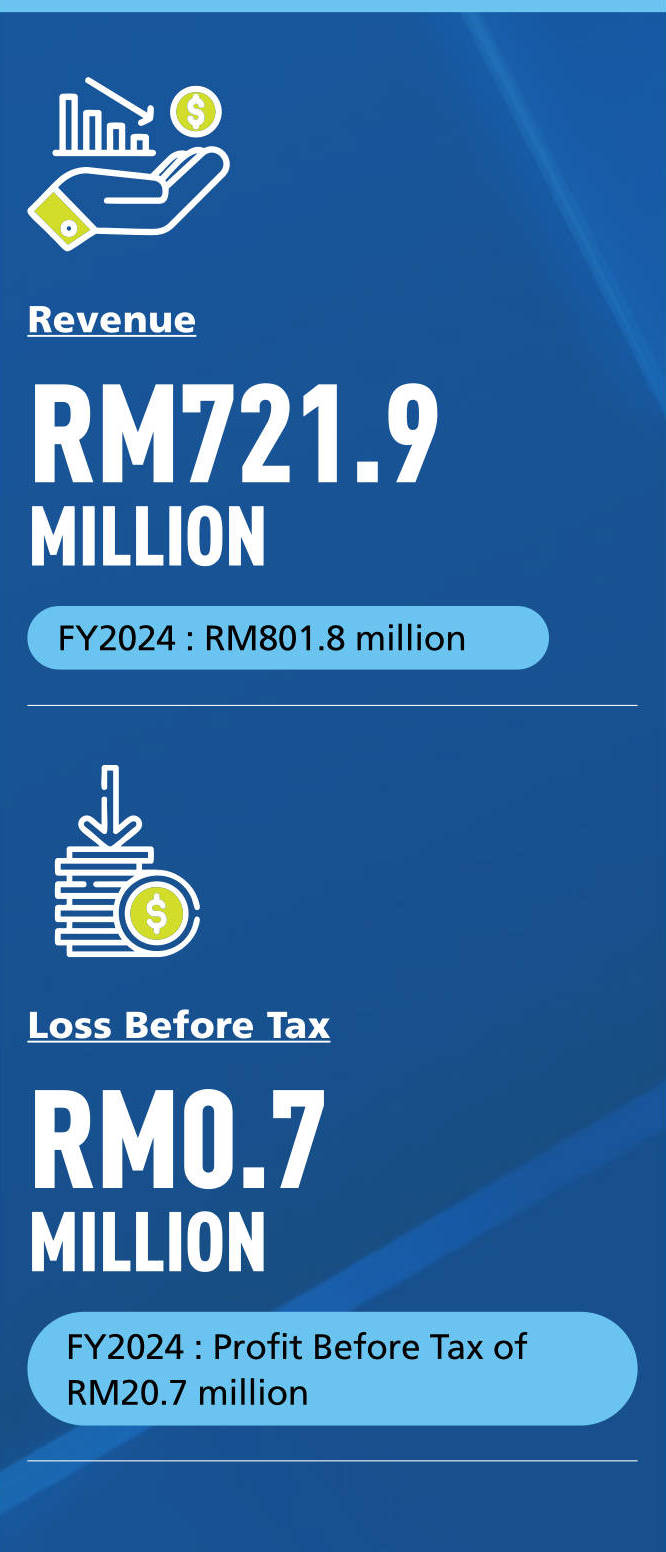
Steel Operation Review
In the first financial quarter of
FY2025, the Steel Division reported
revenue of RM198.4 million and a Loss
Before Tax ("LBT") of RM2.6 million.
Performance was adversely affected
by the steepest and longest steel price
downtrend since the pandemic, with
prices falling below USD490/tonne
in September 2024. Competitive
pressures intensified from both legal
and illegal imports, particularly from
China. Export demand was softer,
HRC-CRC price spreads narrowed, and
a sharp Ringgit appreciation further
eroded margins. Nevertheless, the
division sustained export sales, which
contributed 20% of total revenue for
the quarter.
In the second financial quarter,
revenue rose 3% quarter-on-quarter
to RM204.1 million, supported by
stronger sales volumes in the CRC
segment (up 13% mainly from
exports) and the Steel Tube segment
(up 6%). However, the positive
volume effect was tempered by lower
average selling prices, in line with
the ongoing steel price downtrend.
The division also benefited from a
net foreign exchange gain of RM1.3
million, compared with a net loss
of RM2.9 million in the preceding
quarter, as the Ringgit depreciated
against both the USD and SGD after
its sharp appreciation in Quarter 1.
Consequently, the division returned
to profitability with a Profit Before
Tax ("PBT") of RM1.9 million.
In the third financial quarter, revenue
fell sharply by 26% to RM151.6
million, driven by lower sales volumes
in both CRC segment (down 28% due
to weaker exports) and the Steel Tube
segment (down 22% due to heavier
Chinese pipe imports). Seasonal
factors, including fewer working
days during the Chinese New Year
and Ramadan, further reduced sales.
Although steel prices stabilised during
the quarter, external conditions
worsened: the US proposed heavy
levies on Chinese-owned or flagged
vessels (on 21 February 2025), a 25%
tariff was imposed on all imports
from Mexico and Canada (effective
4 March 2025) and the US extended
a blanket 25% tariff on all steel and
aluminium imports under Section
232 of the Trade Expansion Act
1962, removing all prior exemptions
(effective 12 March 2025). These
measures disrupted regional supply
chains and severely curtailed the Steel
Division's export orders, margins,
and deliveries to the US and related
markets.
In the fourth financial quarter,
the Steel Division's performance
rebounded, with revenue rising
11% quarter-on-quarter to RM167.8
million. CRC segment sales volumes
grew 11%, while Steel Tube segment
volumes surged 39%, partly reflecting
recovery from the shorter working
period in Quarter 3. However, margins
remained under pressure as diverted
Chinese steel exports flooded the
region, compounding the impact
of US tariffs. Gross profit fell 29%,
further weighed down by a RM0.7
million impairment on property,
plant, and equipment.
|
 |
FOOD DIVISION
|
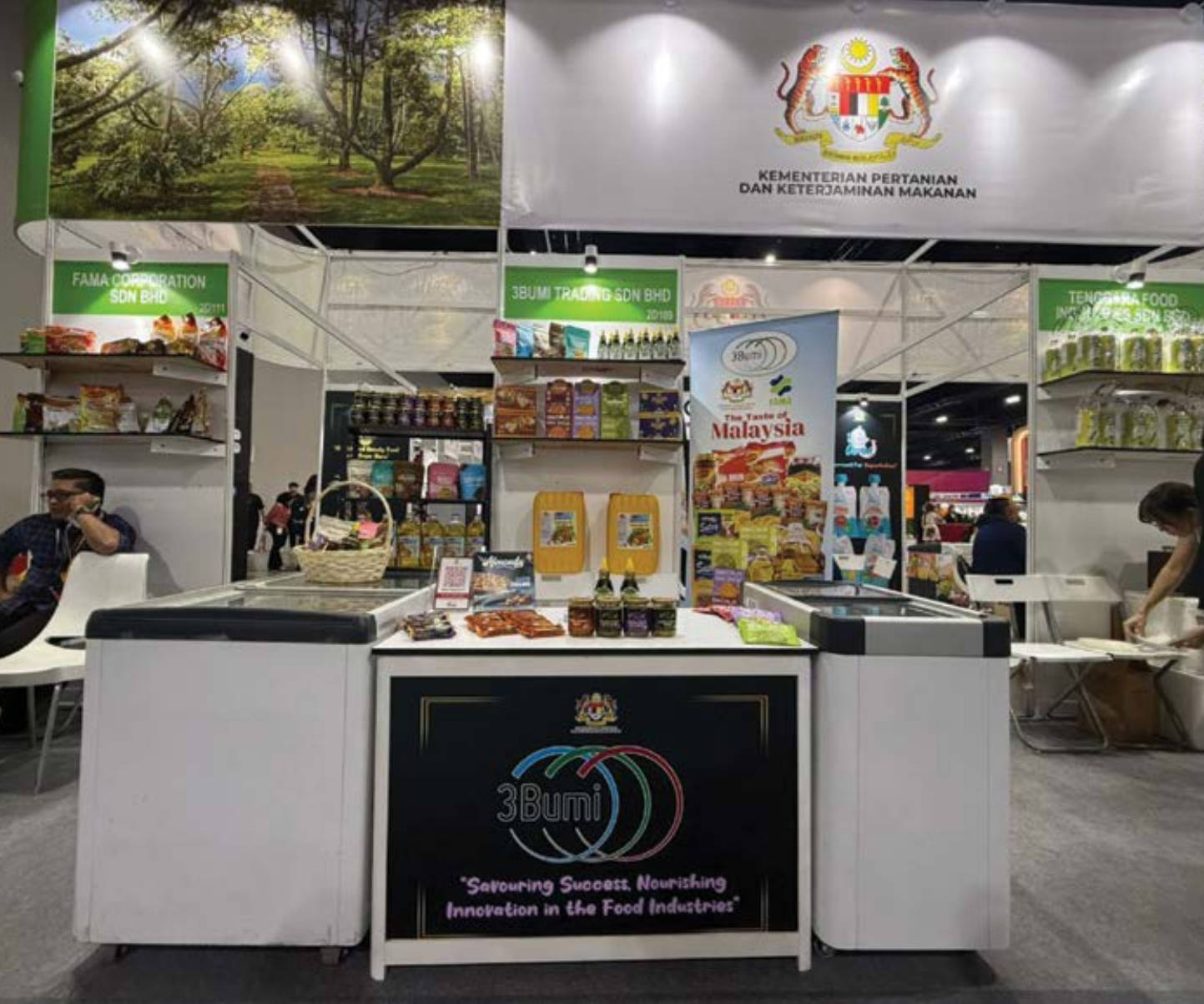 The Food Division, managed under 3Bumi, continues to represent a relatively
small share of the Group's overall business portfolio.
The Food Division, managed under 3Bumi, continues to represent a relatively
small share of the Group's overall business portfolio.
In FY2025, performance remained underwhelming, largely reflecting subdued
consumer sentiment. Rising food price inflation and affordability concerns
dampened household spending, including during festive periods when demand
would typically strengthen. Domestic sales were weaker than expected, and
overall market conditions remained lacklustre.
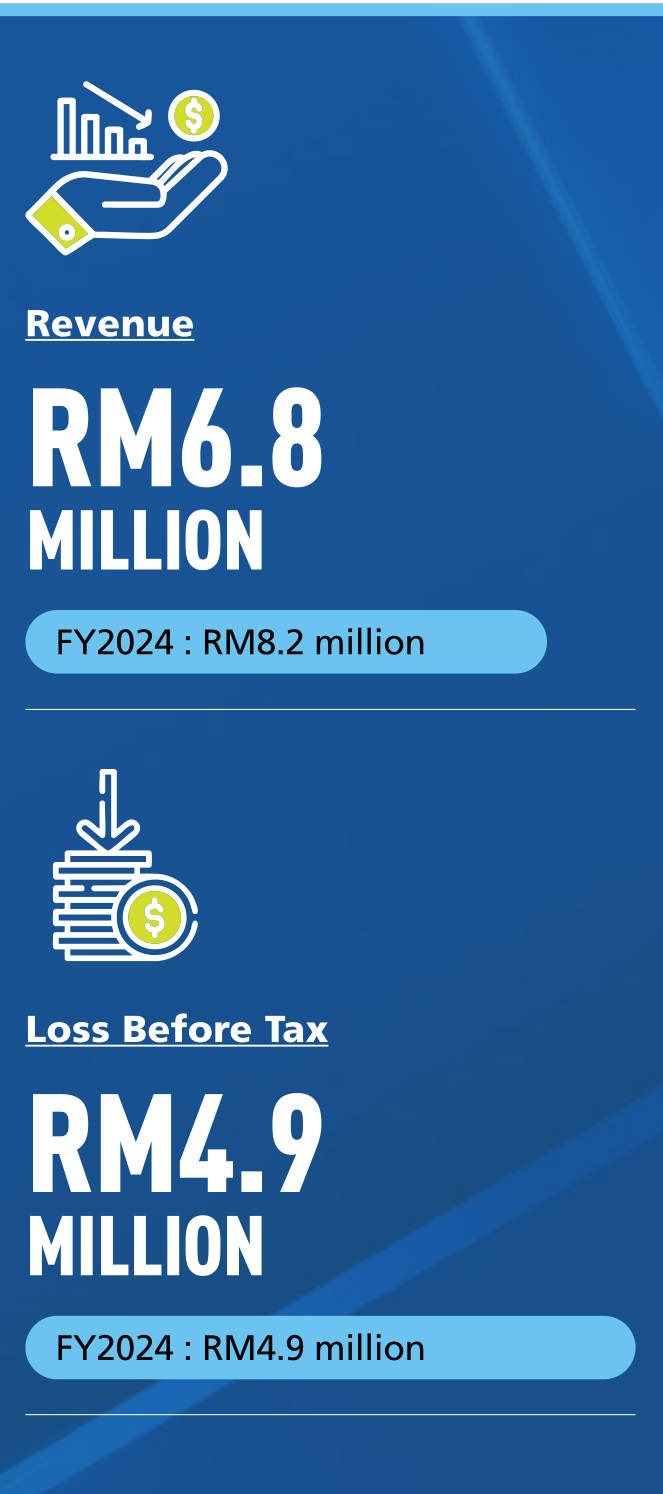
As a result, divisional revenue declined by 17% year-on-year to RM6.8 million.
The division maintained a stable LBT of RM4.9 million, broadly unchanged
from the previous year.
|
|
COMMITMENT TO GOOD CORPORATE GOVERNANCE
|
 The Board has continued to exercise clear oversight and provide strategic
guidance in navigating an increasingly complex regulatory and risk landscape.
The Group remains committed to upholding strong governance practices,
with the Board actively engaging management on matters of strategy,
risk management, and stakeholder expectations. The Board firmly believes
that sound governance is essential to sustaining the Company's long-term
performance and its ability to deliver consistent value to shareholders.
The Board has continued to exercise clear oversight and provide strategic
guidance in navigating an increasingly complex regulatory and risk landscape.
The Group remains committed to upholding strong governance practices,
with the Board actively engaging management on matters of strategy,
risk management, and stakeholder expectations. The Board firmly believes
that sound governance is essential to sustaining the Company's long-term
performance and its ability to deliver consistent value to shareholders.
SUSTAINABILITY INTEGRATION & DIRECTION
In FY2025, the Group made notable progress in
advancing its environmental and social agenda, with ESG
(Environmental, Social, and Governance) considerations
increasingly embedded into operations. The adoption of
IFRS S1 and S2 standards has strengthened climate-related
disclosures and integrated risk management into business
decisions-an important step toward building long-term
resilience. Aligning ESG with enterprise risk management
has further enhanced the Group's ability to anticipate and
respond to emerging challenges, including supply chain
disruptions, regulatory developments, and climate-related
risks.
The Group remains mindful of its responsibility to society
and the environment. Ongoing sustainability initiatives
focus on improving the social and economic wellbeing
of local communities, while advancing environmental
commitments such as reducing carbon emissions and water
usage, enhancing waste management, and embedding
sustainable practices across operations. These initiatives
are central to creating long-term value and delivering on
the Group's ESG priorities.
Consistent with the previous year, the Group has
undertaken limited assurance on selected sustainability
information, underscoring its commitment to transparency
and accountability. Further details are set out in the
Sustainability Statement.
|
PROSPECTS FOR THE NEW FINANCIAL YEAR
|
As the Group enters FY2026, the operating landscape is expected to remain challenging and volatile against a backdrop
of persistent global uncertainties. Domestically, the new financial year has already seen cost escalations, including higher
sales and service taxes, port tariffs, electricity tariff adjustments, rising wages and logistics costs. These increases will
substantially impact production and operating expenses, most of which cannot be passed on to customers due to the
pricing inelasticity of steel and food products and the availability of lower-priced import alternatives. This rising cost of
doing business, seen in recent years, continues to erode the competitiveness of Malaysia's steel manufacturers and food
traders.
|
Steel Division Outlook
Global steel dynamics remain pressured. Although China's announced
production cuts may help partially rebalance supply, they are unlikely to fully
offset the short-term oversupply caused by aggressive export activity.
At the same time, stimulus measures in China have yet to deliver meaningful demand recovery. With global demand
subdued and competition intensifying, Malaysia's steel sector continues to face significant import pressure.
On the domestic front, the S&P Global Manufacturing PMI rose to 49.9 in August 2025, the highest since February
2025, though it remained below the neutral 50 mark for the 12th consecutive month, signalling continued
contraction. Encouragingly, the Government has taken measures to cushion external pressures by accelerating
National Plan projects and easing banking reserve requirements to boost liquidity. Recent enforcement actions
against smuggled and mis-declared steel imports have also helped curb unfair trade, while local steel associations
are actively promoting greater localisation of steel usage among foreign-owned businesses. These measures have
supported a gradual recovery in domestic demand, particularly for Cold Rolled Coils.
|
PROSPECTS FOR THE NEW FINANCIAL YEAR (CONT'D)
|
Food Division Outlook
Globally, the meat market (fresh and processed) is expected to record steady
growth in developing economies, though demand in advanced markets may
moderate as consumers shift toward healthier and more sustainable diets.
Geopolitical risks, including armed conflicts and political
instability, continue to drive volatility in staple food
markets, complicating global trading strategies. Price
fluctuations and supply disruptions from key exporters
remain significant challenges for food traders.
In Malaysia, higher business costs are putting additional
pressure on food prices. With wholesale and retail
margins already compressed, statutory cost increases
risk undermining affordability and competitiveness.
Businesses remain cautious about raising prices, given
signs of consumer pullback.
Recognising these headwinds, the Group intends to
reposition the Food Division through a more strategic
approach. Key initiatives under review include:
- Product portfolio realignment - focusing on higher
margin or niche categories with more resilient
demand;
- Cost optimisation - improving operational efficiency
to narrow losses;
- New sales channels - expanding into e-commerce
and forming partnerships with established retailers
to expand market reach; and
- Selective export expansion - leveraging overseas
demand for Malaysian food products.
These initiatives will be critical in determining whether
the Food Division can deliver sustainable growth and
meaningful contributions, or whether its role should be
reshaped within the Group's broader portfolio strategy.
|
|
CONCLUSION
|
In conclusion, the Group acknowledges that FY2026 will remain a demanding year, with rising costs and global headwinds
weighing on performance. Nevertheless, opportunities exist through resilience, efficiency, and strategic adaptation. Key
initiatives-including pursuing anti-dumping measures, expanding into new markets, and strengthening stakeholder
engagement are expected to enhance competitiveness and support the Group's long-term growth trajectory.
|
ACKNOWLEDGEMENTS
On behalf of the Board, I would like to express my profound appreciation
and thanks to all our people across the Group for their dedication, hard work
and contributions throughout FY2025. Their commitment and perseverance
remain central to the Group's continued progress and resilience.
I would also like to convey my sincere thanks to my fellow Board members for their steadfast support, strategic
input and guidance during the past year.
To our valued business partners, customers, suppliers, and shareholders; we deeply appreciate your trust and
unwavering support.
|
|
TUNKU DATO' YAACOB KHYRA
Executive Chairman
|
|
|
|
|
|
|



